Table of Contents
- Why Manufacturers Are Investing in Ceramic Fiber Blanket Production
- How a Ceramic Fiber Blanket Production Line Actually Works
- The Shift Toward Fully Automatic Manufacturing
- Energy Efficiency: Where the Real Savings Hide
- Key Equipment Breakdown
- Understanding the True Cost of Ownership
- How to Pick the Right Production Line Manufacturer
- Return on Investment: What the Numbers Actually Look Like
- Mistakes That Cost Buyers Thousands
- Getting Started with ZOUYU
Let me be honest about something: buying a ceramic fiber blanket production line is not like buying most industrial equipment. You can't just browse a catalog, pick a model, and expect it to show up at your factory ready to run. The reality is far messier — and far more interesting.
I've spent years working alongside factories that produce refractory insulation materials, and one thing I keep noticing is how wildly the outcomes differ between buyers who do their homework and those who don't. Some ceramic fiber blanket production line installations hit target capacity within weeks. Others spend months troubleshooting problems that were entirely avoidable.
This guide is my attempt to put everything you actually need to know into one place. Not the glossy brochure version — the real stuff. We'll talk about how these lines work, what automation actually buys you, where the hidden costs live, and how to avoid the mistakes I've watched other buyers make.
Why Manufacturers Are Investing in Ceramic Fiber Blanket Production
The demand for high-temperature insulation isn't slowing down anytime soon. Steel mills, petrochemical refineries, power plants, cement kilns — they all need ceramic fiber blankets, and they need them in volume. When you factor in tightening energy efficiency regulations across Europe and Southeast Asia, the market outlook for the next decade looks remarkably solid.
Here's what's driving the rush: most established insulation distributors are realizing that importing finished blankets from China leaves a lot of margin on the table. Setting up your own blanket production facility lets you control quality, reduce lead times, and capture the manufacturing margin that currently goes to your supplier. For companies already trading in refractory materials, the transition makes intuitive sense.
But there's a catch. Not every production line delivers the same results. The difference between a well-engineered line and a poorly configured one can mean 20-30% variance in energy consumption, product consistency, and output quality. That's not a small number when you're running 24/7.
How a Ceramic Fiber Blanket Production Line Actually Works
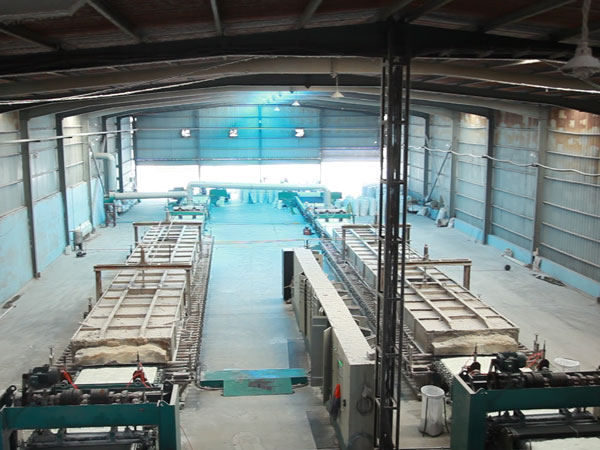
Before we get into the buying decision, it helps to understand the process end to end. A typical aluminum silicate blanket line involves six major stages, each with its own equipment and quality checkpoints.
Raw Material Preparation
It starts with high-purity alumina and silica — usually calcined bauxite and quartz sand. These get mixed in precise ratios depending on the grade you're targeting. Standard grade (ST) runs about 46% Al2O3, while high-alumina (HA) bumps that to 52-55%. The raw material blend determines everything downstream, so getting this right is non-negotiable.
Melting
The mixed materials go into a resistance furnace operating at temperatures above 2000°C. Modern furnaces use molybdenum electrodes and magnetic voltage regulators to maintain stable arc conditions. This is where most quality problems originate — inconsistent melting temperature produces uneven fiber diameter, which cascades through every subsequent step.
Fiber Formation
Molten material gets converted into fiber through either spinning (centrifugal) or blowing processes. The spinning method tends to produce more uniform fiber diameter (typically 3-4.5 micrometers), while blowing can achieve slightly finer fibers but with less consistency. Most modern blanket production facilities favor spinning for this reason.
Fiber Collection and Blanket Formation
Fibers are collected on a moving belt to form a continuous mat. The collection system controls blanket thickness and density uniformity. This stage sounds simple, but getting even distribution across the full width requires well-calibrated air flow and belt speed control.
Needle Punching
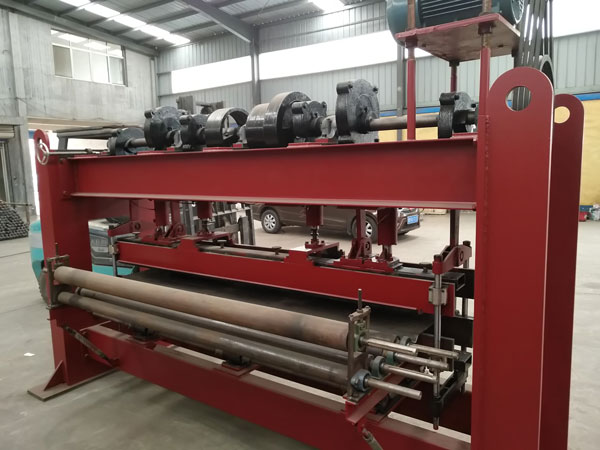
This is where the blanket gets its structural integrity. A needle loom with thousands of barbed needles punches through the fiber mat, mechanically interlocking the fibers. The punching density — typically 200-400 strokes per square centimeter — directly affects tensile strength and the blanket's ability to resist delamination under thermal cycling.
Cutting, Rolling, and Packaging
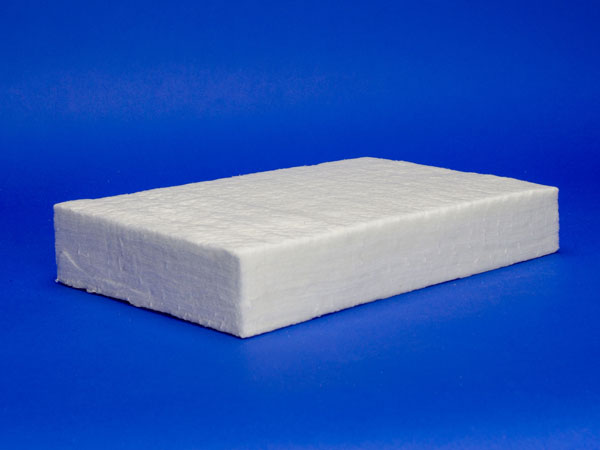
The continuous blanket passes through a cutting system that trims edges and cuts to standard lengths (commonly 7200mm x 610mm). Automatic winding machines roll the blanket to specified density, and the finished rolls get packaged for shipment. Standard densities range from 96 to 160 kg/m³ depending on the application.
The Shift Toward Fully Automatic Manufacturing
Five years ago, most ceramic fiber lines still relied heavily on manual intervention. Operators adjusted furnace parameters by eye, changed needle loom settings based on experience, and rolled blankets by hand. It worked, but it didn't scale well.
The current generation of automatic ceramic fiber blanket manufacturing plants has changed that equation entirely. Here's what modern automation actually looks like on the factory floor:
DCS (Distributed Control System) — The central nervous system of the plant. A DCS monitors and controls furnace temperature, fiber spinning speed, collection belt velocity, needle punching frequency, and cutting dimensions from a single control room. Operators can see the entire process on screen and make adjustments in real time. ZOUYU's current systems integrate Siemens or equivalent PLC hardware with custom HMI interfaces designed specifically for refractory production.
Automatic Feeding System — Raw material proportioning and feeding used to be one of the most labor-intensive parts of the process. Modern systems use weigh hoppers, screw feeders, and pneumatic conveying to deliver precisely metered batches to the furnace. The result? Consistent chemistry from batch to batch, which is exactly what your customers expect.
Self-Adjusting Needle Loom — This was a game changer when it first appeared. Instead of manually setting punching density, the system reads blanket thickness and density in real time and adjusts needle penetration depth and stroke frequency automatically. The uniformity improvement is dramatic — we've seen tensile strength variance drop from ±15% to under ±5%.
Auto-Winding with Tension Control — Producing rolls with consistent density used to depend almost entirely on operator skill. Automated winding systems with servo-controlled tension produce identical rolls every time, which matters when your customer is calculating how many blankets they need per furnace.
An automatic ceramic fiber blanket manufacturing plant doesn't just reduce labor costs — though it typically cuts direct labor by 40-60%. The bigger payoff comes from consistent quality, reduced scrap rates, and the ability to run 24/7 without the quality drift you get with manual shift changes.
Energy Efficiency: Where the Real Savings Hide
Let's talk about something that doesn't get enough attention: the operating cost of running a fiber production line is dominated by energy. The melting furnace alone accounts for roughly 60-70% of total power consumption. When you're comparing production lines, the energy efficiency of the furnace design matters more than almost anything else.
An energy-saving ceramic fiber production line typically incorporates several design features that older lines simply don't have:
Improved Furnace Insulation — Modern resistance furnaces use multi-layer refractory linings with optimized thermal profiles. Better insulation means less heat loss through the furnace walls, which translates directly into lower power draw per ton of fiber produced. This single upgrade is often the biggest differentiator between a standard setup and a genuinely energy-saving ceramic fiber production line.
Heat Recovery Systems — Some advanced designs capture waste heat from the furnace exhaust and collection chamber to preheat incoming raw materials or to supply hot air to the drying oven. This kind of thermal integration can reduce overall energy consumption by 15-20%.
Variable Frequency Drives (VFDs) — Fixed-speed motors running at full capacity regardless of actual demand waste enormous amounts of electricity. VFDs on the spinning machine, collection fan, and needle loom allow the system to match power consumption to actual production rate. During startup and changeover, the difference is substantial.
Optimized Electrode Design — Molybdenum electrode geometry affects arc stability and power efficiency. Newer electrode configurations reduce power consumption per kilogram of melted material while simultaneously extending electrode life.
I've seen the gap between a standard line and an energy-saving ceramic fiber production line amount to 800-1,200 kWh per ton of blanket output. At industrial electricity rates, that's a difference of $80-150 per ton in energy costs alone. For a 5,000-ton-per-year plant, you're looking at $400,000-750,000 in annual savings. The numbers speak for themselves.
Key Equipment Breakdown
Let me walk through the major equipment items you'll be evaluating, with some practical notes on what to look for.
| Equipment | Key Specifications | What to Watch For |
|---|---|---|
| Resistance Furnace | Power: 200-600 kW Capacity: 2-10 tons/day |
Electrode type, refractory lining quality, voltage regulation system |
| Spinning/Blowing Machine | Fiber diameter: 2-4.5 μm Output: 200-500 kg/hr |
Bearing quality, speed control range, maintenance access |
| Fiber Collection System | Belt width: 610-1220 mm Speed: 2-15 m/min |
Air flow uniformity, belt tracking, edge control |
| Needle Punching Loom | Strokes: 200-800/min Width: 610-1220 mm |
Needle density, self-adjusting capability, vibration isolation |
| Drying Oven | Temp: 100-300°C Length: 6-15 m |
Temperature uniformity, air circulation, insulation quality |
| Cutting & Winding | Length accuracy: ±5 mm Roll density: 96-160 kg/m³ |
Blade quality, tension control, automation level |
| DCS Control System | PLC brand, I/O points, HMI screens | Expandability, remote access, data logging capability |
One thing buyers often overlook: the auxiliary systems. Water circulation, compressed air, nitrogen supply, and dust extraction might seem like afterthoughts, but they directly affect uptime. A line that's down because the water pump failed is a line that's not producing blankets. Budget for quality auxiliaries from the start. When you're configuring an energy-saving ceramic fiber production line, every auxiliary component deserves the same scrutiny as the main equipment.
Understanding the True Cost of Ownership
Here's where I need to be straight with you. The cost of aluminum silicate blanket production line equipment varies enormously depending on capacity, automation level, and origin. A basic semi-automatic line from a smaller workshop might come in at $300,000-500,000. A fully automatic line from an established manufacturer can run $1-3 million or more, depending on capacity.
But the equipment price is just the starting point. When people ask me about the cost of aluminum silicate blanket production line ownership, I break it down like this:
Capital expenditure (CapEx): Equipment purchase, shipping and installation, factory preparation (foundation, electrical, water), initial spare parts inventory, and commissioning costs. Add 25-35% on top of the equipment FOB price for a realistic total.
Operating expenditure (OpEx): Raw materials (alumina and silica account for roughly 40-50% of per-unit cost), electricity (20-30%), labor (10-15% for automated lines, 25-35% for manual), consumables (electrodes, needles, blades, filters), and maintenance.
Hidden costs that catch buyers off guard: Spare parts shipping from overseas (can be $5,000-10,000 per emergency shipment), production losses during changeover and startup (typically 5-10% of rated capacity in the first year), quality rejects before the process is dialed in, and training costs for operators and maintenance staff. Experienced ceramic fiber blanket production line manufacturers will flag most of these costs upfront — the less reputable ones won't.
The cost of aluminum silicate blanket production line ownership over five years often turns out to be 2-3x the initial equipment price. That's not necessarily bad — a well-run line generates revenue that far exceeds this total. But you need to go into the purchase with eyes open.
How to Pick the Right Production Line Manufacturer
There are probably 30-40 companies worldwide that claim to build ceramic fiber production equipment. Maybe 10-15 of them can actually deliver a line that runs reliably for years. The rest? They'll sell you something that looks right on paper but generates endless headaches in practice. Finding trustworthy ceramic fiber blanket production line manufacturers takes effort, but it's the single most important decision you'll make in this process.
When evaluating ceramic fiber blanket production line manufacturers, here's what I've found separates the serious ones from the pretenders:
They operate their own production lines. This is the single most important qualifier. A manufacturer that runs its own ceramic fiber production facility has learned things no amount of engineering theory can teach. They know which bearing fails first, which sensor gives false readings, which belt speed causes edge curl. ZOUYU, for instance, operates multiple production lines at its own facilities in Shandong — the equipment they sell to customers is the same equipment they rely on daily.
They offer references you can actually visit. Any reputable manufacturer should be willing to connect you with existing customers in your region. Talk to those customers. Ask about commissioning experience, first-year production quality, and how responsive the manufacturer was when problems came up — because problems always come up. If you can tour an automatic ceramic fiber blanket manufacturing plant that the manufacturer built and installed, that's the best due diligence you can do.
They provide detailed technical documentation. Not just a sales brochure — actual engineering drawings, equipment specifications, P&ID diagrams, electrical schematics, and a commissioning protocol. If a manufacturer can't or won't provide this level of detail before you sign the contract, that tells you something important about their engineering depth.
They invest in after-sales infrastructure. The best ceramic fiber blanket production line manufacturers maintain spare parts warehouses, employ dedicated service engineers, and offer remote diagnostic support. The equipment is only as good as the support behind it.
Return on Investment: What the Numbers Actually Look Like
Let's put some concrete numbers on the table. These figures are based on typical installations in Southeast Asia and the Middle East, which represent the most active markets right now.
Scenario: 3,000 ton/year automatic line
| Item | Annual Value |
|---|---|
| Revenue (average $1,800/ton) | $5,400,000 |
| Raw materials | $1,350,000 |
| Energy | $600,000 |
| Labor (automated line, 15 staff) | $225,000 |
| Maintenance & consumables | $150,000 |
| Other overhead | $120,000 |
| Gross Profit | $2,955,000 |
With a total project investment of $1.5-2 million (equipment, installation, and first-year working capital), most buyers achieve payback within 12-18 months of reaching stable production. That's a strong return by any industrial standard. A fully automatic ceramic fiber blanket manufacturing plant pays for itself faster than almost any other refractory equipment investment, provided you choose the right configuration for your market.
The key caveat: these numbers assume you reach stable production within 2-3 months of commissioning. Lines from less experienced manufacturers sometimes take 6-12 months to stabilize, which dramatically affects the actual ROI timeline. The cost of aluminum silicate blanket production line ownership over that extended ramp-up period can be significantly higher than projected. This is where paying more upfront for a proven system from established manufacturers pays dividends down the road.
Mistakes That Cost Buyers Thousands
After watching dozens of installations over the years, I've compiled a list of the most expensive mistakes I see buyers make:
1. Undersizing the electrical supply. A 3,000-ton line needs 400-600 kVA of stable power. Some buyers discover after installation that their factory's transformer can't handle the startup surge of the furnace. Upgrading a transformer after the fact costs $30,000-80,000 and delays production by weeks.
2. Skipping the water treatment system. The cooling water for the furnace and spinning system needs to meet specific hardness and temperature requirements. Running untreated water through the system causes scale buildup that reduces heat transfer efficiency and accelerates component wear.
3. Buying on price alone. I know the budget is always a constraint. But the cheapest line almost always costs more over five years than a mid-range line from a reputable manufacturer. The difference shows up in energy consumption, spare parts frequency, product quality rejects, and downtime. If energy efficiency matters to your bottom line — and it should — an energy-saving ceramic fiber production line from a proven supplier will outperform a budget option every single time.
4. Underestimating training needs. An automatic ceramic fiber blanket manufacturing plant still needs skilled operators. Budget for a minimum 2-week training program — ideally at the manufacturer's facility — covering operations, maintenance, quality control, and safety protocols.
5. Ignoring local regulations. Dust emissions, noise levels, and waste disposal requirements vary by country. Make sure the line's dust extraction and exhaust systems meet your local environmental standards before installation.
Getting Started with ZOUYU
If you've read this far, you're probably serious about setting up a blanket production facility — and you're asking the right questions. That already puts you ahead of most buyers I've worked with.
ZOUYU has been designing and manufacturing ceramic fiber production equipment for a decade. Among ceramic fiber blanket production line manufacturers worldwide, ZOUYU stands out because we operate our own production lines, which means every piece of equipment we sell has been proven in real-world conditions before it ever reaches your factory. Our automatic ceramic fiber blanket manufacturing plants are running in facilities across Southeast Asia, the Middle East, Africa, and South America.
What we offer isn't just equipment — it's a complete partnership. That includes factory layout design, equipment manufacturing, shipping logistics, on-site installation supervision, operator training, and ongoing technical support with guaranteed spare parts availability.
If you're evaluating the cost of aluminum silicate blanket production line options and want to compare real numbers, we're happy to prepare a detailed quotation based on your target capacity, product grades, and local conditions. Our energy-saving ceramic fiber production line designs typically deliver 15-25% lower operating costs compared to conventional configurations, and we can show you the data to prove it.
Reach out to our team through the contact page or request a quote directly. We usually respond within 24 hours with a preliminary proposal.
"The best production line is the one that runs reliably day after day, produces consistent quality, and doesn't keep you up at night worrying about the next breakdown. That's what we build."