Table of Contents
Introduction
Both ceramic fiber and rock wool are widely used industrial insulation materials, but they serve very different applications and operate under fundamentally different conditions. For engineers, plant managers, and procurement professionals, understanding the strengths and limitations of each material is essential for making the right selection.
Choosing between ceramic fiber and rock wool is not simply a matter of picking the better insulator. The decision depends on your operating temperature, the chemical environment, installation constraints, weight considerations, and budget. A material that excels in one application may be entirely unsuitable in another.
In this article, the ZOUYU technical team provides a detailed, side-by-side comparison of ceramic fiber and rock wool across the properties that matter most. Whether you are insulating a 1300°C industrial furnace or a commercial HVAC duct, this guide will help you select the optimal material with confidence.
What is Ceramic Fiber?
Ceramic fiber, also known as alumino-silicate fiber, is a lightweight refractory material manufactured from high-purity alumina and silica raw materials. The production process uses resistance furnace melting at temperatures exceeding 2000°C, followed by spinning or blowing to form fine fibers typically 2 to 4 micrometers in diameter.
ZOUYU produces ceramic fiber in five distinct grades to cover a broad range of industrial needs: COM grade rated to 1100°C, ST (Standard) grade rated to 1260°C, HP (High Purity) grade also rated to 1260°C but with lower impurity content, HA (High Alumina) grade rated to 1360°C, and HZ (Zirconia) grade rated to 1430°C. Each grade is engineered with a specific alumina-to-silica ratio and, in the case of HZ, the addition of zirconium oxide for enhanced high-temperature stability.
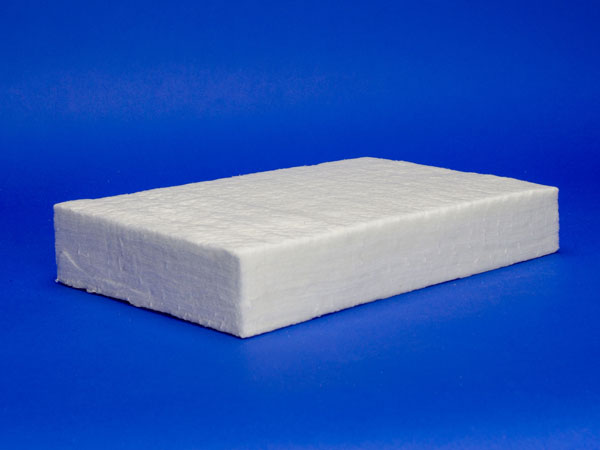
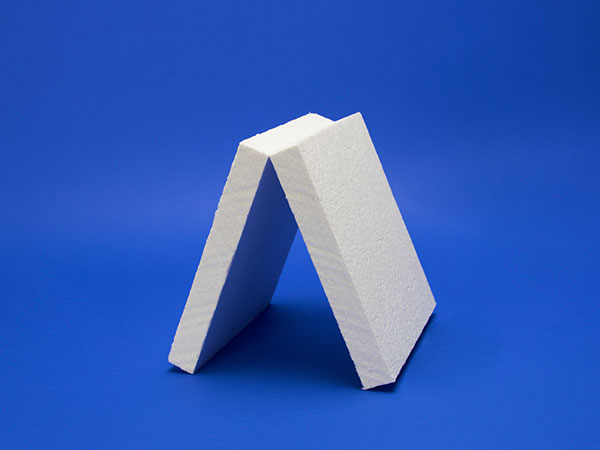
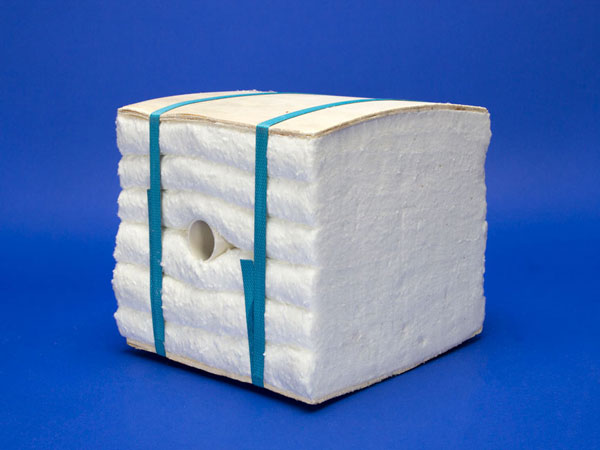
Ceramic fiber is available in multiple product forms including blankets, modules, boards, and paper, giving engineers the flexibility to match the form factor to the application. One of the defining characteristics of ceramic fiber is its extremely low density, ranging from 96 to 350 kg/m³ depending on the product form. This makes it remarkably lightweight compared to traditional refractory materials like firebrick or castable linings.
What is Rock Wool?
Rock wool, also called mineral wool or stone wool, is manufactured from natural basalt rock and recycled slag. These raw materials are melted at approximately 1600°C and then spun into fibers using high-speed centrifugal spinning equipment. The fibers are bonded together with resins or other binding agents to produce insulation batts, boards, loose-fill, and pipe sections.
The maximum continuous operating temperature for rock wool is approximately 600 to 650°C. Beyond this threshold, the binder begins to degrade and the fibers lose structural integrity. Within its operating range, however, rock wool provides reliable thermal insulation, excellent acoustic absorption, and good dimensional stability.
Rock wool is denser than ceramic fiber, with typical densities ranging from 40 to 200 kg/m³ depending on the product type. It is primarily used for building insulation, HVAC ductwork, low-temperature pipe insulation, and fire protection in construction. Its non-combustible nature and sound absorption properties have made it a standard material in building codes worldwide.
Temperature Resistance
Temperature resistance is the single most decisive difference between ceramic fiber and rock wool, and it is the factor that most often determines which material is appropriate for a given application.
Ceramic fiber is the clear winner in this category. Depending on the grade, ZOUYU ceramic fiber products can withstand continuous operating temperatures as follows: COM grade up to 1000°C, ST grade up to 1050°C, HP grade up to 1100°C, HA grade up to 1200°C, and HZ grade up to 1350°C. The maximum classification temperatures (the point at which the fiber begins to degrade) are even higher, reaching 1430°C for the HZ grade.
Rock wool, by contrast, has a maximum operating temperature of approximately 600 to 650°C. Above this threshold, the organic binders decompose and the fiber structure progressively collapses. For any application operating above 650°C, ceramic fiber is not just preferable—it is the only viable option.
This temperature gap has major practical implications. Industrial furnaces, kilns, reformers, and process heaters routinely operate between 800°C and 1350°C. In these environments, rock wool simply cannot function. Attempting to use it would result in rapid degradation, loss of insulation performance, and serious safety hazards. Ceramic fiber was developed specifically to fill this gap and remains the standard refractory insulation material for high-temperature industrial equipment.
Thermal Conductivity
Thermal conductivity measures how effectively a material resists heat flow. Lower values indicate better insulation. However, conductivity varies with temperature, and this is where the comparison becomes nuanced.
At room temperature and moderate temperatures up to about 200°C, rock wool actually demonstrates slightly lower thermal conductivity, typically ranging from 0.035 to 0.045 W/m·K. Ceramic fiber at room temperature shows values between 0.07 and 0.09 W/m·K. On paper, rock wool appears to be the better insulator in low-temperature conditions.
However, at elevated temperatures, the picture changes dramatically. At 800°C, ceramic fiber maintains a thermal conductivity of approximately 0.176 W/m·K, providing effective and predictable insulation. Rock wool at the same temperature would be structurally destroyed—the comparison becomes meaningless because the material simply cannot survive. Even at 400°C, rock wool's conductivity rises significantly as its binder degrades, while ceramic fiber remains stable.
The key takeaway is that insulation performance depends entirely on the operating temperature. For low-temperature applications below 300°C, rock wool offers marginally better conductivity. For any application above 500°C, ceramic fiber provides vastly superior and more reliable insulation. Its low thermal conductivity combined with low heat storage capacity also enables faster heating cycles and reduced energy consumption in batch-type furnace operations.
Weight and Installation
Weight is an important practical consideration that affects structural support requirements, handling ease, and installation labor costs.
Ceramic fiber blankets are significantly lighter than most rock wool products at comparable thicknesses. Standard ceramic fiber blankets have densities of 96 to 128 kg/m³, making them easy to handle, cut, and shape on-site. The material can be trimmed with a standard utility knife, formed around complex geometries, and secured with anchors or high-temperature adhesive. ZOUYU's ceramic fiber modules, which come with integrated anchor systems, enable particularly rapid installation on furnace walls and roofs, reducing labor time and cost.
Rock wool products span a wide density range. Lightweight batts may be as low as 40 kg/m³, but high-density industrial boards can exceed 200 kg/m³. For comparable insulation thicknesses in industrial settings, rock wool installations tend to be heavier and bulkier, requiring more robust support structures and additional mechanical fastening. The material is also more rigid, making it harder to fit around irregular surfaces and penetrations.
Both materials require personal protective equipment during installation, including gloves, long sleeves, and dust masks, as fibers from both can cause temporary skin and respiratory irritation. However, the lighter weight and greater flexibility of ceramic fiber generally translate to faster, less labor-intensive installation, especially in complex furnace lining projects.
Chemical Resistance
Chemical resistance is critical in industrial environments where insulation may be exposed to process gases, corrosive vapors, or chemical spills.
Ceramic fiber from ZOUYU is manufactured to 99% purity or higher, giving it excellent resistance to most chemicals encountered in industrial settings. It withstands exposure to most acids, solvents, and oxidizing atmospheres at operating temperatures. The primary exceptions are hydrofluoric acid, phosphoric acid, and strong alkalis at elevated temperatures, all of which can attack the silica component of the fiber. In reducing atmospheres containing hydrogen or carbon monoxide, the maximum recommended operating temperature should be reduced by 100 to 150°C to prevent accelerated degradation.
Rock wool demonstrates good moisture resistance and does not promote mold or bacterial growth, which is one reason it is favored in building construction. However, it is vulnerable to acidic environments. Prolonged exposure to acidic condensates or process gases can degrade the fiber structure and reduce insulation performance. Rock wool is generally not suitable for chemical processing environments or applications where corrosive atmospheres are present.
For harsh industrial environments such as petrochemical plants, steel mills, and chemical processing facilities, ceramic fiber's superior chemical stability makes it the clear choice. In building envelopes and standard HVAC applications, rock wool's moisture resistance is more relevant.
Durability and Lifespan
Lifespan and durability are influenced not only by the material properties but also by operating conditions and maintenance practices.
At high temperatures, properly installed and maintained ceramic fiber linings can last 5 to 10 years or more. The key factors affecting ceramic fiber lifespan are operating temperature relative to the rated maximum, thermal cycling frequency, gas velocity in the furnace, and chemical exposure. Running a blanket at or near its maximum rated temperature continuously accelerates fiber devitrification (crystallization), which gradually makes the fiber brittle. Selecting a grade rated 50 to 100°C above your actual operating temperature significantly extends service life.
Rock wool, when operated within its temperature range, can last 10 to 20 years in building and HVAC applications. Its lifespan is primarily limited by moisture ingress, physical damage, and binder degradation over time. However, if rock wool is exposed to temperatures even moderately above its 650°C limit, it degrades rapidly and may fail within months or even weeks.
Thermal cycling is another important durability factor. Ceramic fiber exhibits excellent thermal shock resistance, meaning it can withstand repeated rapid heating and cooling without cracking or spalling. This property is essential for batch furnaces and kilns that cycle between ambient and operating temperature. Rock wool, while dimensionally stable at low temperatures, does not have the same thermal shock capability and can become brittle after repeated cycling even within its rated range.
Cost Comparison
Cost analysis should always consider total cost of ownership rather than just the initial purchase price, especially for industrial insulation where energy costs and maintenance intervals play a major role.
Rock wool is cheaper upfront. Typical pricing ranges from $2 to $5 per square meter for standard products, making it an economical choice for building insulation and low-temperature applications where its performance limitations are not an issue.
Ceramic fiber products are more expensive initially, typically ranging from $8 to $25 per square meter depending on the grade, density, and form factor. However, for high-temperature applications, the total cost equation favors ceramic fiber for several reasons. First, ceramic fiber lasts significantly longer at elevated temperatures, reducing replacement frequency and associated downtime costs. Second, its superior insulation at high temperatures lowers energy consumption, with savings that can be substantial in continuously operated furnaces. Third, its lighter weight reduces structural support requirements and installation labor.
For high-temperature industrial applications above 600°C, the break-even point where ceramic fiber's energy savings and longer service life offset its higher initial cost typically arrives within 2 to 3 years. After that point, ceramic fiber continues to deliver lower operating costs for the remainder of its service life. In contrast, attempting to use rock wool in such applications would result in rapid failure and repeated replacement costs that far exceed the initial savings.
When to Choose Which
Based on the technical comparison above, here are clear guidelines for selecting between ceramic fiber and rock wool.
Choose Ceramic Fiber For:
- Industrial furnaces and kilns operating above 600°C, including heat treatment, forging, annealing, and ceramic firing equipment.
- High-temperature ductwork and vessels in petrochemical plants, including reformers, crackers, and heater linings.
- Power generation equipment such as boiler insulation, turbine lagging, and flue duct lining in both conventional and waste-to-energy plants.
- Any application exceeding 600°C where rock wool would fail structurally.
- Applications requiring rapid thermal cycling, such as batch furnaces, where ceramic fiber's low heat storage and thermal shock resistance are essential.
Choose Rock Wool For:
- Building insulation in walls, roofs, and floors where fire resistance and thermal performance are required at ambient temperatures.
- HVAC duct insulation where acoustic absorption and moderate thermal insulation are the primary goals.
- Soundproofing in commercial and residential construction, leveraging rock wool's excellent sound absorption properties.
- Low-temperature pipe insulation for hot water lines, steam lines below 600°C, and chilled water systems.
- Fire protection in construction, including fire-rated wall assemblies, structural steel protection, and firestopping applications.
Quick Comparison Summary
| Property | Ceramic Fiber | Rock Wool |
|---|---|---|
| Max Operating Temp | 1000–1350°C (up to 1430°C HZ) | 600–650°C |
| Thermal Conductivity (Room) | 0.07–0.09 W/m·K | 0.035–0.045 W/m·K |
| Thermal Conductivity (800°C) | ~0.176 W/m·K | N/A (material fails) |
| Density | 96–350 kg/m³ | 40–200 kg/m³ |
| Chemical Resistance | Excellent (except HF, H3PO4, strong alkalis) | Good (vulnerable to acids) |
| Thermal Shock Resistance | Excellent | Moderate |
| Lifespan (at rated temp) | 5–10+ years | 10–20 years (low temp) |
| Typical Cost | $8–25/m² | $2–5/m² |
| Primary Applications | Industrial furnaces, kilns, petrochemical | Building, HVAC, fire protection |
For high-temperature industrial applications exceeding 600°C, ceramic fiber is the clear and only choice, offering superior temperature resistance, long-term durability, and energy efficiency. ZOUYU's comprehensive range of ceramic fiber blankets and ceramic fiber boards provides solutions for virtually every high-temperature insulation challenge.
For building insulation, HVAC systems, and low-temperature industrial applications, rock wool remains an excellent, cost-effective solution with proven performance and widespread availability.
If you are unsure which material is right for your application, contact our technical team for expert guidance. ZOUYU's ISO 9001-certified engineering team has helped clients in over 50 countries select the optimal insulation solution for their specific operating conditions.